
Featured video
Odin Was a Real Man? — An Eyewitness They Tried To Hide!
Could a historical ruler’s memory have merged with an older god? This video explores the hypothesis through historical texts and royal genealogies.
 WODENSMANTHE HISTORICAL ODIN PROJECT
MIGRATION · MEMORY · EVIDENCE
Historical memory behind Odin: a person becoming divine, or an older god absorbing a human life?
An independent investigation across inscriptions, ancient geography, royal genealogies and the long road north.
Explore the evidence See project updates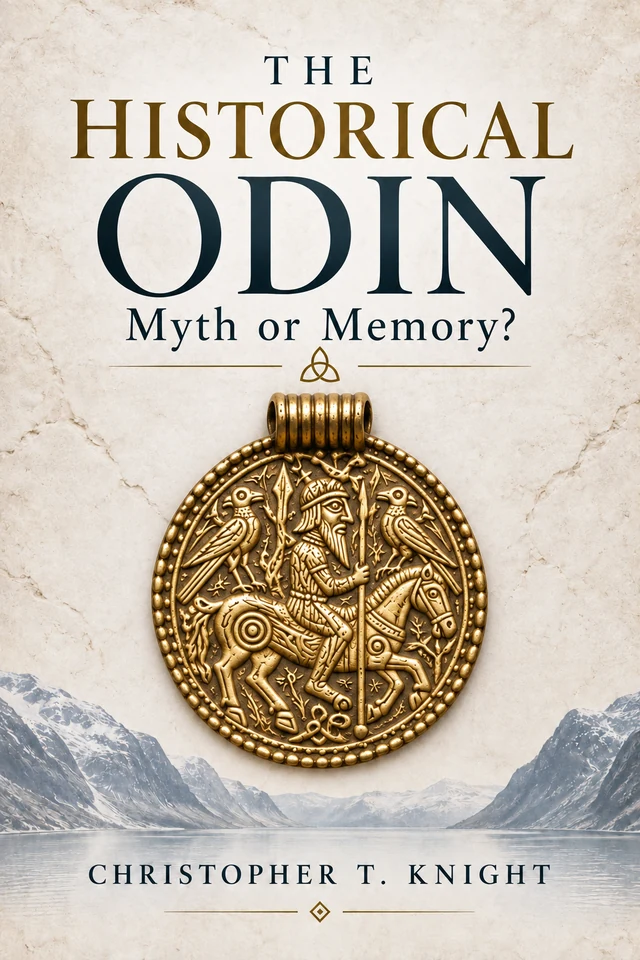
Migration, Memory, and a
Two-Thousand-Year-Old Mystery
WODENSMAN LIBRARY · ABSOLUTELY FREE
Register to read and download primary texts, scholarly studies and historical maps. We’ll email you a personalised Library Card with your name and member number.
WodensMan · From the desk
New reading, featured videos and a look at the film as it takes shape.
Featured video
Could a historical ruler’s memory have merged with an older god? This video explores the hypothesis through historical texts and royal genealogies.
Our latest research note looks at what Tacitus actually wrote and why the comparison with Wodan matters.
Read the noteA historical drama set in fifth-century Europe, currently in development.
Explore the filmTHE WODENSMAN PROJECT
Independent research into the history behind the traditions of Woden and Odin.
WodensMan is Christopher T. Knight’s research and publishing project. It tests two ways historical memory might have shaped the traditions of Odin: a human life could have entered divine tradition, or an older god could have absorbed the memory of a ruler, priest or war leader.
The project compares primary sources with published scholarship, including work by John Colarusso on Caucasian languages and traditions, Neil Price on Viking Age archaeology and pre-Christian religion, and runologists Lisbeth M. Imer and Krister S. K. Vasshus on the Vindelev bracteates.
We cite our sources, explain what the evidence supports, and show where interpretation begins.
Why WodensMan? The name comes from a fifth-century inscription found at Vindelev. Imer and Vasshus translate the wording as “He/who [is] Óðin’s man.” Christopher adapted it into the project’s name and motto: “I am Woden’s man.”
THE RESEARCH POSITION
The Historical Odin: Myth or Memory? investigates two distinct historical possibilities. Neither is presented as an established identification of Odin.
The memory of a historical person, or a composite of people, develops into a divine figure through ancestry, cult and storytelling.
An already existing god becomes fused with the life or memory of a later human figure. This scenario does not require Odin to have begun as an ordinary man.
Both scenarios must be tested against chronology, independent evidence, source dependence and competing explanations, including literary invention and coincidence. Texts, archaeology and population genetics have different limits; agreement is not independent confirmation when sources depend on one another.
Read the full methodology →OPEN THE CASE
Sources first. Interpretation visible.
Room for the case to change.
Navigate key sites from the Black Sea frontier to the Mälaren region. Compare what each piece shows—and what remains unresolved.
Open the evidence atlas 02 / READBrowse original texts, scholarly studies and historical maps, compare editions and follow their source records.
Browse the library 03 / INVESTIGATETwo historical-core models, a working book structure, and the objections that any convincing case must answer.
Meet the book
THE FILM PROJECT · POSTER CONCEPT
WODEN: The Last Road From Azagar. A historical drama in development from Christopher T. Knight and House Media LLC.
Discover WODEN Videos & photos