Was there a historical Woden?
DNA Studies
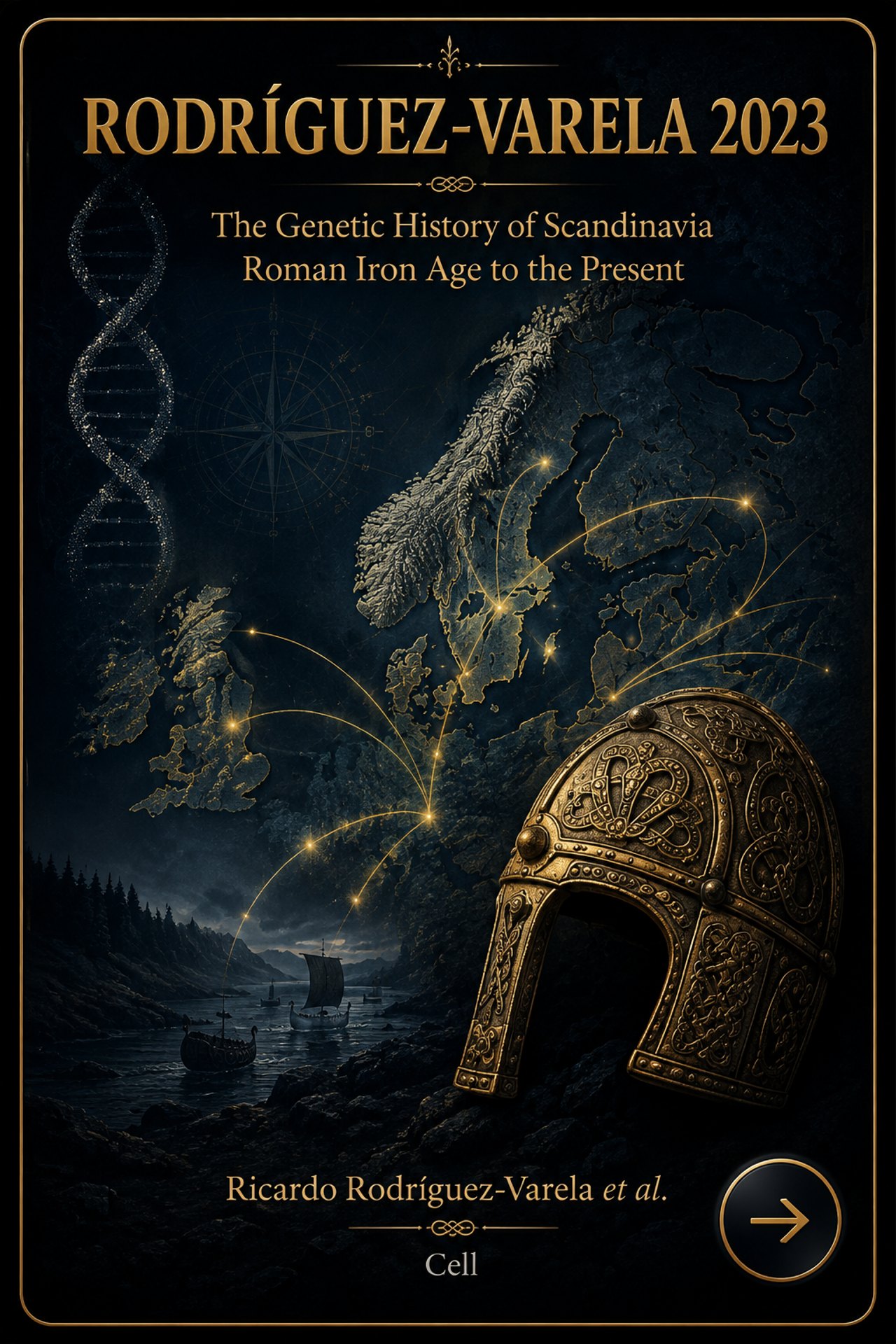
Peer-reviewed ancient-genome research underpinning the migration evidence. Open a study to read the source.
Official Briefings
Download research documents, field notes, and primary source materials.
WODEN — UPCOMING SHORT FILM
Our Methodology
Every historical investigation begins with a simple question: How do we decide what is most likely to be true?
The Case for the Historical Odin is built on a straightforward principle. No single source, artifact, inscription, or DNA study can answer that question on its own. Instead, we examine independent lines of evidence and look for patterns where they converge. When archaeology, historical texts, linguistics, genetics, and geography all point in the same direction, they create a stronger historical case than any one discipline could provide alone.
- 01Follow the evidence, even when it challenges expectations.
- 02Prefer primary and early sources whenever possible.
- 03Distinguish documented evidence from interpretation.
- 04Compare multiple independent disciplines rather than relying on a single source.
- 05Cite sources so readers can examine the evidence themselves.
- 06Revise conclusions when stronger evidence becomes available.
Not all evidence carries the same historical weight. Our investigation generally gives greater priority to:
Each category contributes differently. The goal is not to make one field prove another, but to determine whether independent disciplines support the same historical possibility.
Rather than searching for a single smoking gun, we evaluate whether multiple independent sources converge on the same conclusion. A historical hypothesis becomes stronger when evidence from different fields can be explained by the same model without forcing the data to fit.
History is an ongoing investigation, not a finished story. As new discoveries are made and new scholarship becomes available, this project will continue to evolve. When the evidence changes, our conclusions will change with it.
Follow the evidence.
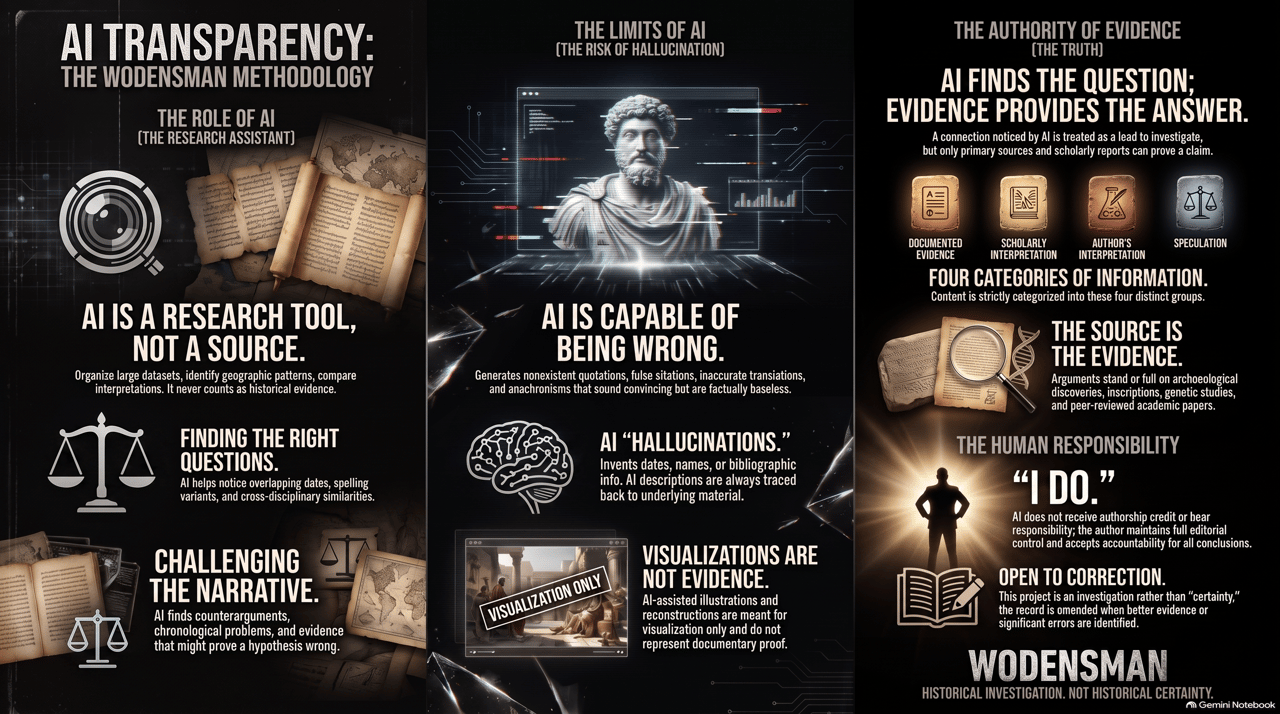
AI Use & Research Transparency Disclaimer
Artificial intelligence is used in the preparation of some material published on this website. Because AI can be an extremely useful research and editorial tool—but can also make mistakes—I believe readers deserve a clear explanation of how I use it and, equally importantly, how I do not use it.
Use the tabs above to navigate each aspect of this policy in full.
AI helps me research, organise, question, analyse, write, and edit. It does not determine what is historically true.
AI output is treated as a research aid—not a primary source, not an academic authority, and not evidence in itself.
The arguments published here ultimately stand or fall on the quality of the sources, the reasoning applied to them, and the ability of the evidence to withstand scrutiny.