Research
Deifying the Crown: How Kings Became Gods in Norse Mythology
 By Christopher T. Knight
Published
A dead king, a public cult and the political power of ancestry. How did memories of rulers become part of the sacred world?
Forget Asgard for a moment. Forget the ravens, the spear, and the eight-legged horse. If we want to understand how a ruler could become a god in early Germanic culture, we should begin with a dead king, an angry missionary, and a political crisis in ninth-century Sweden.
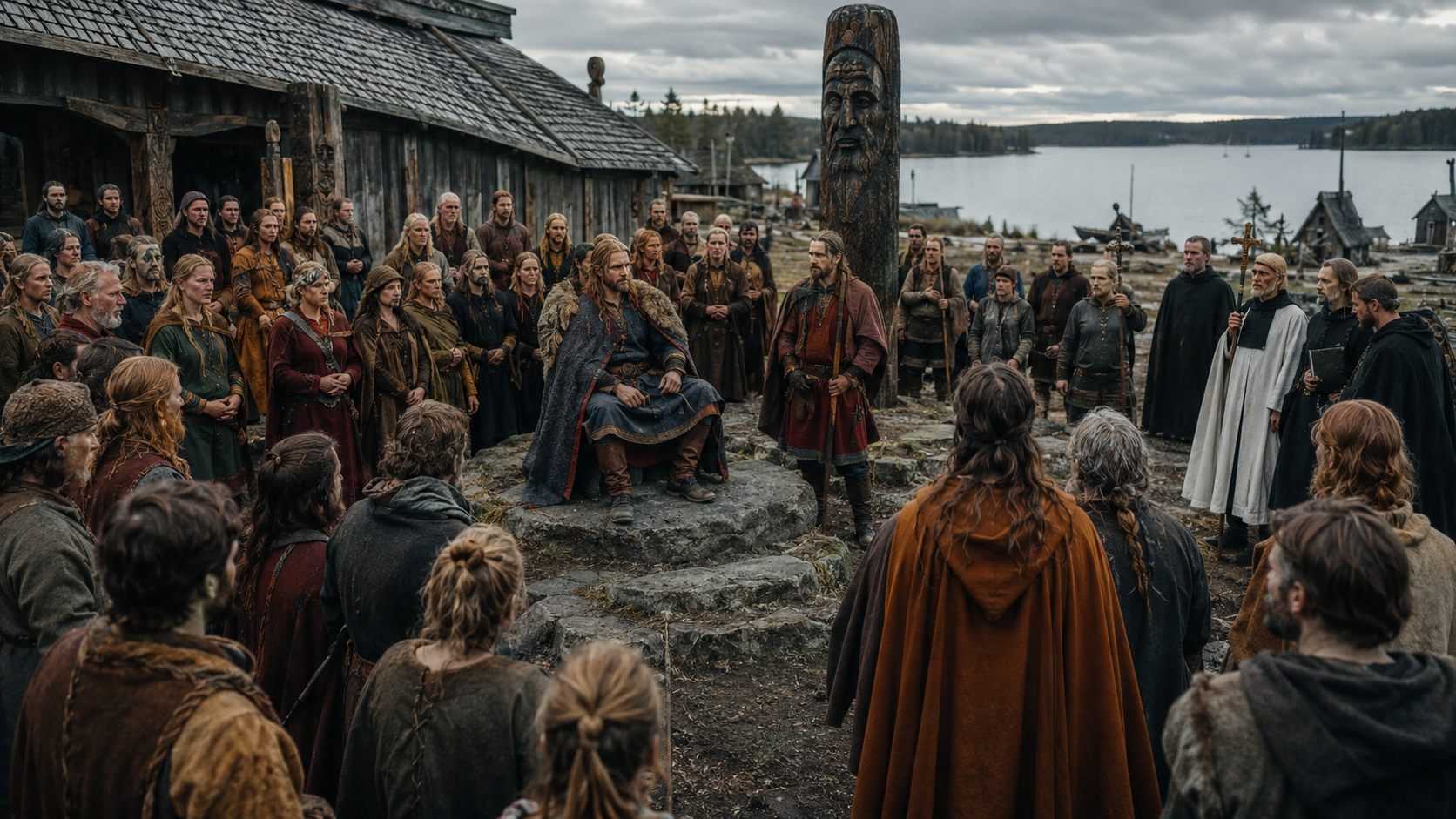
Around 852 or 853, the missionary Ansgar returned to the trading town of Birka. According to the Life of Ansgar, written by his successor Rimbert, someone arrived claiming to carry a message from the local gods. The message was blunt: the Swedes did not need Christianity. If they wanted another deity, they could simply admit their former King Eric into the divine club.
Then Rimbert adds the detail that changes everything. The people had already resolved to build Eric a temple and had begun making offerings and sacrifices to him "as to a god."
There it is. No thunderbolt. No cosmic birth. No primordial cow licking him out of the ice. A dead king, a public cult, a proposed temple, and the machinery of deification already running.
That does not prove Odin was a historical warlord. It does, however, demolish the lazy assumption that a human ruler becoming a god would have been unthinkable in Viking Age Sweden. Apparently, it was thinkable enough to put on the agenda.
The King Eric problem: what the source actually says
The transcript that inspired this article called the king Eric Refilsson. That identification is possible, but it is not secure. Rimbert calls him only a former King Eric. Attempts to match him with Eric Refilsson depend on much later saga genealogies, so the responsible wording is simply "the former King Eric mentioned by Rimbert."
That correction does not weaken the central evidence. In fact, it strengthens it. We do not need a speculative surname because Rimbert's report is already extraordinary on its own.
Rimbert was a Christian churchman writing a saint's life, not an ethnographer with a clipboard. He frames the pagan message as a deception of the devil, and his account has an obvious missionary purpose. Even so, his testimony is unusually specific. He does not merely accuse the Swedes of vague ancestor worship. He describes a concrete proposal involving a named dead king, a temple, votive offerings, and sacrifice.
That is the historical fossil we need: not proof of Odin's biography, but direct evidence for a culture in which royal memory could cross the line into cult.
Old Uppsala and the architecture of sacred kingship
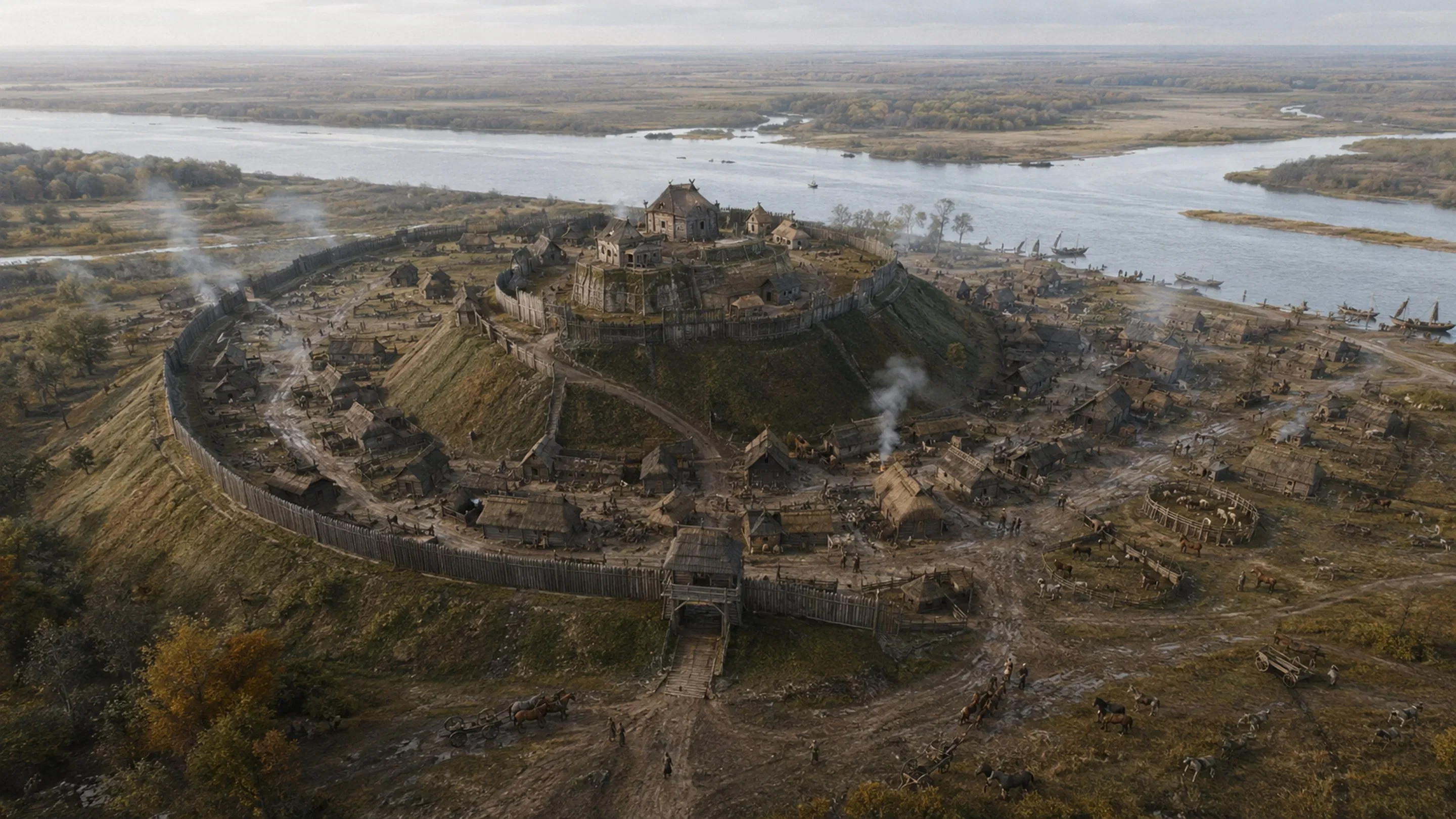
The wider landscape makes Rimbert's story less surprising. Old Uppsala was both a political and religious center. Its monumental royal mounds were built for the ruling elite during the Vendel Period, roughly AD 550 to 800, and the site remained famous in the Viking Age as a place of worship and sacrifice.
Those mounds do not prove that every buried ruler became a god. Archaeology is not a vending machine where you insert a burial mound and receive a named deity. What they do show is the scale of elite commemoration. Powerful families did not merely inherit land and weapons; they inherited a landscape filled with ancestral authority.
In that world, genealogy was political technology.
A ruler who claimed descent from a divine or semi-divine ancestor was not sharing a fun family fact. He was explaining why his bloodline deserved land, tribute, loyalty, and obedience. A royal pedigree connected the living king to the dead, the dead to the sacred, and the sacred to the right to rule.
The crown did not simply borrow holiness. It manufactured it.

Jordanes, the Ansis, and the leaders who became more than men
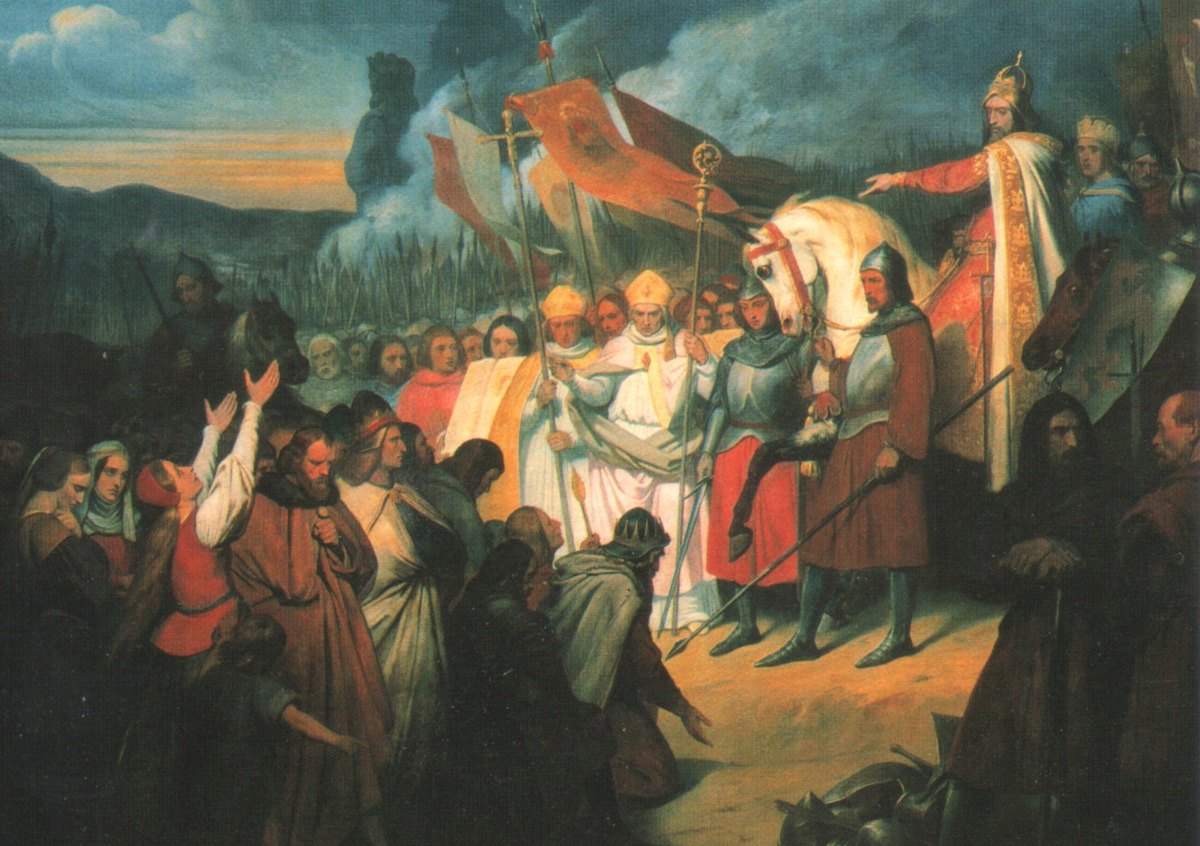
The Swedish example was not isolated. In the sixth century, the Gothic historian Jordanes described a similar transformation among the Goths.
In chapter 13 of the Getica, Jordanes says that the Goths defeated a Roman army, killed the commander Fuscus, and plundered the camp. Because of this victory, they called the leaders through whose good fortune they believed they had conquered "not mere men, but demigods"--Ansis.
One small but important correction: Jordanes does not say that "the gods elevated" these chieftains. The Goths themselves applied the title after victory. That is arguably more revealing. Divine status was not simply descending from the sky; it was being assigned by a community to successful human leaders.
The linguistic connection is also real, but it needs to be stated carefully. Jordanes's Gothic Ansis and Old Norse Æsir are cognate Germanic forms, related through the reconstructed Proto-Germanic word ansuz. Gothic Ansis is therefore not the direct parent of Old Norse Æsir. They are relatives, not father and son.
Still, the cultural overlap is difficult to ignore. Jordanes gives us victorious leaders, heroic genealogy, and a divine title from the same Germanic word-family that later names the gods of Norse mythology.
That is not a signed confession from Odin. It is, however, a very interesting receipt.
Woden at the top of the family tree
The political use of divine ancestry appears just as clearly in Anglo-Saxon England.
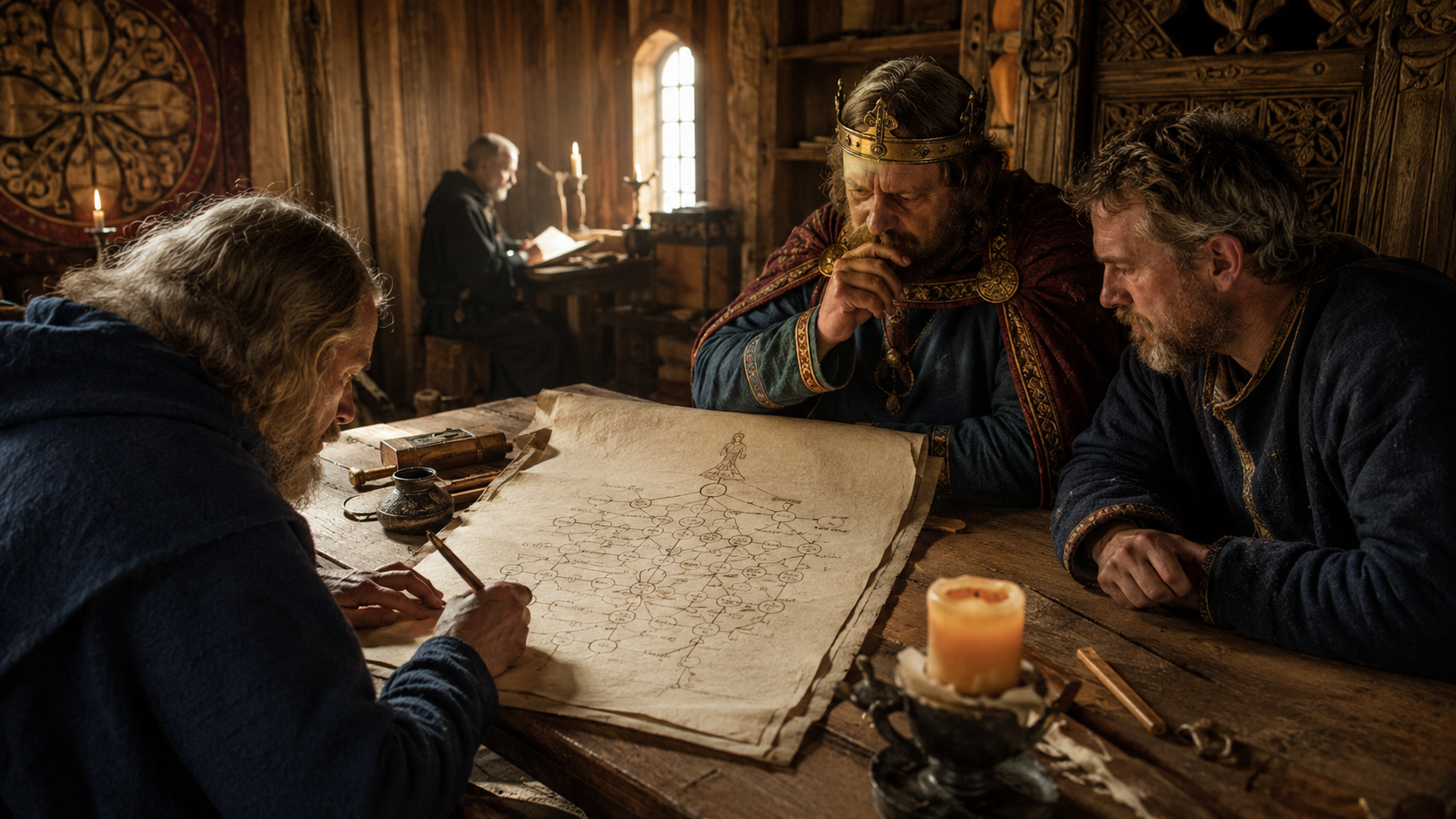
Writing in the early eighth century, Bede traces Hengist and Horsa through Vecta to Woden and adds that the royal race of "many provinces" claimed descent from the same stock. Later genealogical collections place Woden in the ancestries of several English dynasties.
Not every surviving pedigree is identical, and "universally" would be too strong. The Essex line, for example, originally centered on Seaxneat before later genealogists connected him to Woden. The pedigrees were copied, expanded, harmonized, and sometimes re-engineered to serve later political needs.
But that is precisely the point.
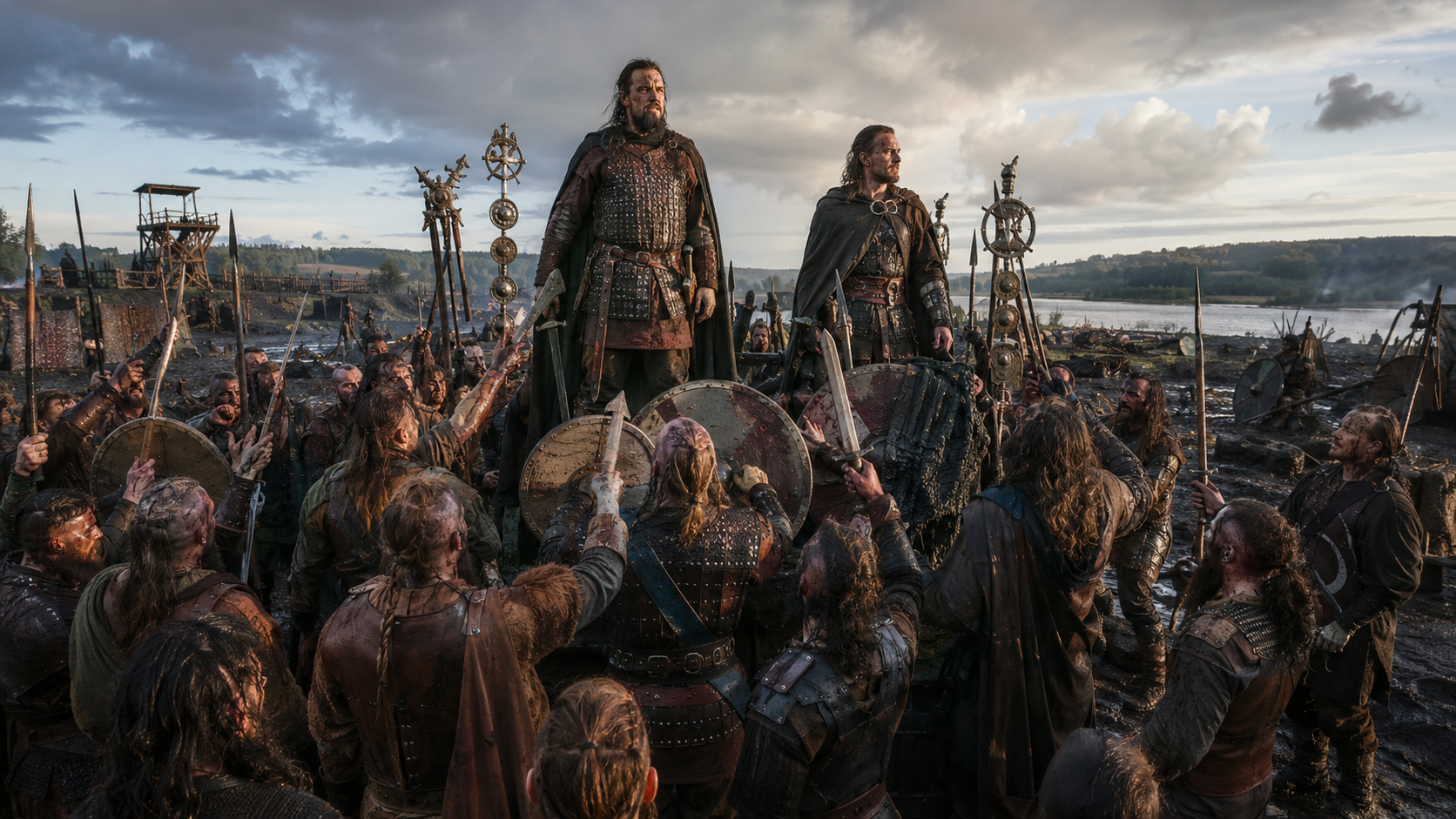
Woden was not confined to a story told beside the fire. He was installed at the summit of royal genealogies. Whether medieval rulers believed every generation literally, used the pedigree symbolically, or did a politically convenient mixture of both, Woden functioned as an ancestor who authorized kingship.
Mythology was not sitting outside politics. It was embedded in the paperwork.
Snorri's Odin: ruler, lawgiver, migrant--and late evidence
Centuries later, Snorri Sturluson opened the Ynglinga saga with an explicitly humanized Odin. Snorri's Odin is a chieftain and priest-king who migrates north, distributes lands, establishes laws, dies in Sweden, and is burned with honor. The Swedes believe he has returned to the old Asgard and begin calling upon him.
The resemblance to King Eric is obvious: a powerful ruler dies, memory becomes cult, and the dead leader acquires continuing authority over the living.
But here we need the brakes as well as the accelerator. Snorri wrote in the thirteenth century, long after Scandinavia had converted to Christianity. His prologue traditions turn the Norse gods into Trojan or Asian migrants, a classic medieval form of euhemerism--the explanation of gods as famous humans who were later worshipped.
Snorri cannot be treated as an eyewitness report about a Bronze Age or Iron Age Odin. His account may preserve older traditions, Christian reinterpretation, learned speculation, political genealogy, or several of these at once.
So Snorri is not the foundation of the argument. Rimbert is earlier and more direct. Jordanes and Bede show the broader Germanic pattern. Snorri matters because his human Odin fits a mechanism independently attested elsewhere--but he does not prove when, where, or whether that mechanism produced Odin himself.
What the evidence proves--and what it does not
This is where discussions about the historical Odin usually go off the rails. One side treats every resemblance as courtroom proof. The other side acts as if myth and history were stored in separate, hermetically sealed jars. The evidence supports neither extreme.
What can we say with confidence?
First, Rimbert reports that people in ninth-century Sweden planned a temple for a dead King Eric and rendered offerings and sacrifices to him as a god.
Second, Jordanes describes Goths calling victorious leaders Ansis, "demigods," and then immediately presents a heroic royal genealogy.
Third, Anglo-Saxon dynasties used Woden as a prestigious royal ancestor, although the genealogies changed over time and served political purposes.
Fourth, Snorri preserves a later narrative in which Odin is a human ruler whose death is followed by continuing worship.
Together, these sources establish a credible cultural mechanism: conquest created prestige; prestige became ancestral authority; ancestral authority legitimized dynasties; and, in at least one directly recorded case, a dead king was moved toward godhood.
What can we not yet say?
We cannot identify Rimbert's Eric with Eric Refilsson beyond reasonable doubt. We cannot use the royal mounds at Old Uppsala to name their occupants with certainty. We cannot turn Jordanes's literary history into a flawless transcript of ancient Gothic belief. And we cannot conclude from Snorri alone that Odin was a single historical man.
The evidence supports a model, not a birth certificate.
Was Odin once a real king?
The most defensible answer is: possibly--but the more important discovery is that the process was real.
Odin may preserve the memory of one exceptional leader. He may be a composite formed from several rulers, ritual specialists, war gods, ancestral figures, and centuries of oral tradition. He may have begun as a deity and later been forced into human genealogies by kings and Christian writers. Those possibilities are not mutually exclusive.
What the King Eric episode changes is the baseline. We no longer have to ask whether early Scandinavians could transform a ruler into a god. Rimbert says they were doing exactly that.
The historical Odin hypothesis therefore does not rest on the childish argument that "all myths are secretly biographies." It rests on a harder and more interesting proposition: political communities can compress conquest, ancestry, ritual, and memory into a sacred personality. Over generations, the seams disappear. The ancestor becomes the god, the genealogy becomes mythology, and the successful claim becomes tradition.
That is how a crown can become a halo.
The research assessment
Did we just prove that Odin was a flesh-and-blood king? No. History does not hand out prizes for sprinting past the evidence.
Did we prove that early Germanic societies possessed the cultural machinery needed to turn human rulers into sacred beings? Yes--and the evidence is sitting in a ninth-century missionary text, a Gothic history, Anglo-Saxon royal pedigrees, and the later Norse tradition itself.
King Eric is not Odin. He is more useful than that. He is a documented example of the process that could help explain how memories of human power entered Germanic mythology and came out wearing divine names.
Odin may not be "just a figure of imagination." But if a historical person stands somewhere behind the Allfather, the road from man to god probably looked less like magic and more like politics.
And honestly, politics pretending to be divine? Humanity has tried stranger things.
Sources and further reading
Rimbert, Life of Ansgar, chapter 26, Internet Medieval Sourcebook: Read online
Jordanes, Getica, chapter 13, section 78, translation by Charles C. Mierow: Read online
Bede, Ecclesiastical History of the English People, Book I, chapter 15: Read online
Snorri Sturluson, Heimskringla: The Ynglinga Saga, Project Gutenberg: Read online
Gamla Uppsala Museum, Upplandsmuseet, overview of the royal mounds and cultic landscape: Read online
John Lindow, Norse Mythology: A Guide to Gods, Heroes, Rituals, and Beliefs (Oxford University Press, 2001), for the Old Norse mythological and linguistic context.
ABOUT THE AUTHOR
Christopher T. Knight
Independent researcher, creator of WodensMan and author of The Historical Odin: Myth or Memory?.