WodensMan Historical Research
Widukind: Child of the Woods—or Child of Woden?
 By Christopher T. Knight
Published
An investigation into the name of the Saxon warrior who defied Charlemagne, and an unexpected linguistic connection to the god Odin.
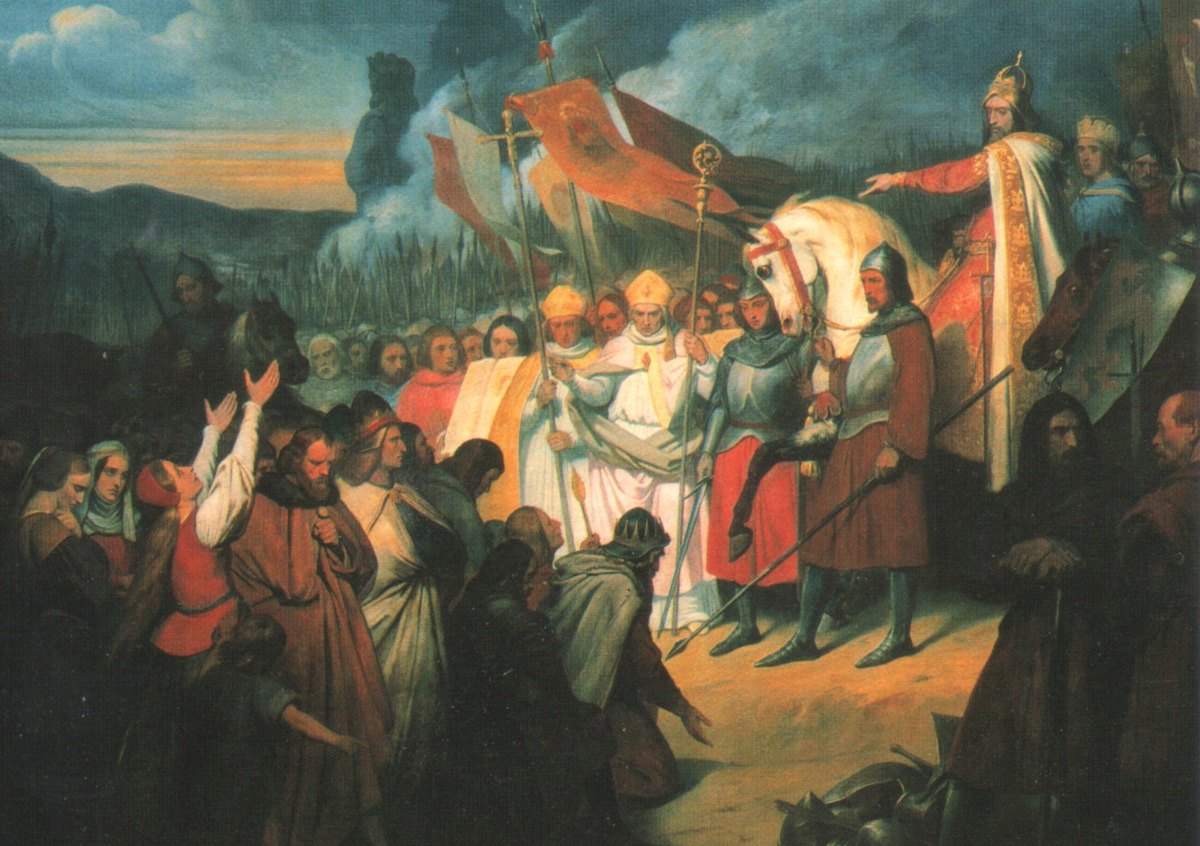
In the eighth century, a Saxon leader named Widukind stood against one of the most powerful rulers in European history: Charlemagne.
He fought to preserve the independence of his people as the expanding Frankish kingdom attempted to bring Saxony under its political and religious authority.
For years, Widukind resisted.
Yet there is another question about this remarkable historical figure that has little to do with battles, kings or conversions.
What did his name actually mean?
When I first encountered the name Widukind during my investigation into the historical origins of Odin, one possibility immediately caught my attention.
Could it mean child of Woden?
Woden was the Anglo-Saxon name of the Germanic deity known in Scandinavia as Odin. Widukind was a leader among the pagan Saxons. And his name sounded remarkably close to a compound of the deity’s name and the Germanic word for child.
The possibility was intriguing.
But historical linguistics has a way of revealing connections that are far more interesting than the ones we initially expect.
Who Was Widukind, the Saxon Leader?
Widukind appears in the historical record during the Saxon Wars, a prolonged series of conflicts between Charlemagne’s Frankish kingdom and the independent Saxon peoples.
The Saxons occupied territories across what is now northern Germany. Their societies maintained pre-Christian religious traditions, while the Franks increasingly associated political submission with Christian conversion.
Charlemagne began his Saxon campaigns in 772 CE.
Widukind emerges in Frankish accounts in 777, when he was absent from an assembly convened by Charlemagne at Paderborn. The records associate him with opposition to Frankish rule and with periods of refuge among northern peoples.
Although the precise extent of his command remains debated, he became one of the most recognisable figures in the resistance.
By 785, however, the situation had changed.
The Royal Frankish Annals record that Widukind and another Saxon leader, Abbi, travelled to Attigny, where they were baptised.
For the Franks, his submission represented a major political victory.
For later generations, Widukind became something else: a legendary defender of Saxon independence.
And that reputation gives his name a particular historical appeal.
What Does Widukind Actually Mean?
The established etymology of Widukind is straightforward.
The name is constructed from two Old Saxon elements:
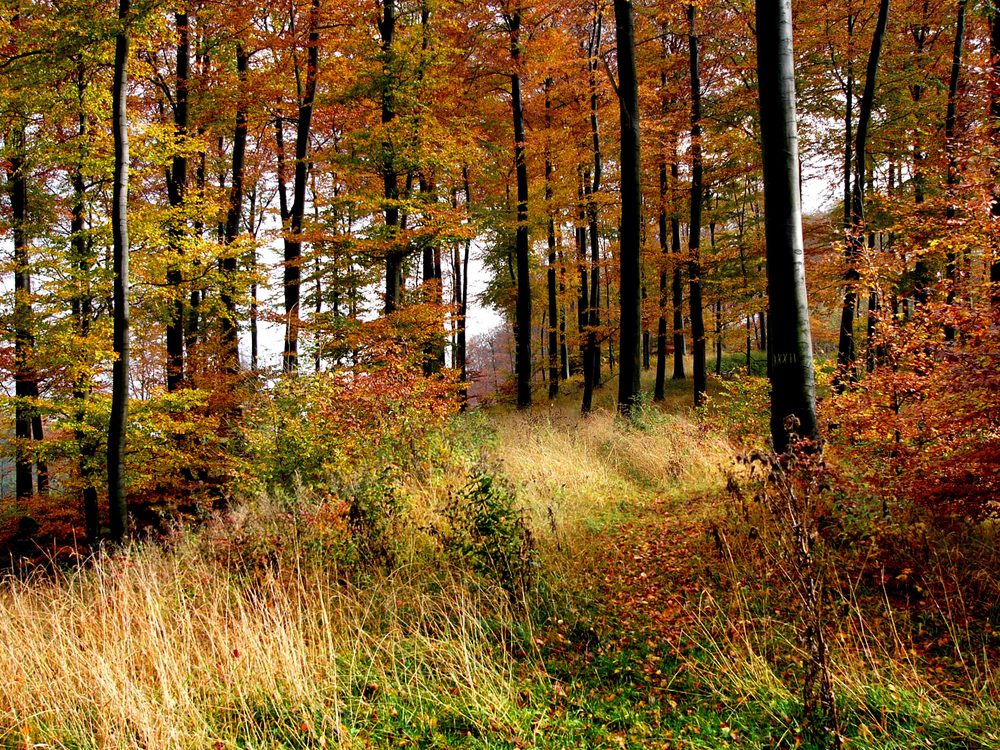
- Widu — wood, woodland or forest.
- Kind — child.
Together they produce the conventional translation “child of the woods” or “child of the forest.”
This interpretation is supported by historical Germanic name studies.
The Dictionary of Medieval Names from European Sources identifies the closely related name Wedekind as a compound of Old Saxon widu or wido, Old High German witu, and Old Saxon kind.
There are also related personal names using the same woodland element, demonstrating that it belonged to a broader Germanic naming tradition.
In other words, widu was not an isolated or inexplicable sound in Widukind’s name. It was a recognisable word with an established meaning.
That is strong evidence against the suggestion that Widukind originally meant “child of Woden.”
But this is where our investigation takes an unexpected turn.
Woden, Wudu and the Two Meanings of Wood
Modern English has preserved something of a linguistic trap.
The word wood looks deceptively simple. Historically, however, two different Germanic words eventually produced identical spellings in English.
One referred to forests and timber.
The other described fury, madness or overwhelming excitement.
Consider the difference:
Old English wudu
This meant woodland, forest or timber. It belongs to the Germanic linguistic family that includes Old Saxon widu.
Old English wōd
This described someone who was frenzied, enraged or mad.
An archaic English adjective wood, meaning mad or furious, survived from this second root.
And here is the important connection:
Woden’s name belongs to the linguistic family associated with frenzy and inspiration—not the one meaning forest.
The reconstructed Proto-Germanic name Wōdanaz, from which Woden and Odin developed, is generally connected to a root expressing ecstatic or furious states.
Those meanings correspond with several characteristics attributed to Odin in Germanic religious literature: battle frenzy, inspired knowledge, supernatural wisdom and poetry.
The similarity between widu and Woden therefore conceals two different linguistic histories.
One leads into the forest.
The other leads towards inspiration and fury.
That distinction fundamentally changes the interpretation of Widukind’s name.
The Second Revelation: Woden’s Name Preserves a Much Older Idea
An eleventh-century account offers particularly revealing evidence.
Adam of Bremen, writing about northern European religious traditions, described Wodan in association with furor, the Latin word for fury.
His description identifies Wodan with warfare and the granting of strength against enemies.
The identification is significant because it provides a medieval explanation consistent with the linguistic relationship between Woden and frenzy.
The name’s connection with ecstatic inspiration also helps explain Odin’s association with poetry in Old Norse traditions.
Matthew Coker’s Oxford doctoral research, Voicing the Supernatural in Anglo-Saxon England, examines this relationship between inspired speech, extraordinary mental states and Woden’s name.
The evidence suggests that the association between Woden and frenzy was not merely a modern attempt to explain an ancient word.
It was recognisable within medieval interpretations of the deity.
This is an important distinction when investigating the historical Odin.
A name can preserve a concept, religious title or cultural association that predates the texts in which it survives.
But its linguistic meaning cannot, by itself, establish whether the deity originated as a historical person.
Could the Saxons Have Understood Widukind’s Name Differently?
Although the original etymology points towards the forest, another question remains.
Did eighth-century Saxons attach any additional religious or symbolic significance to Widukind’s name?
Germanic personal names frequently combined meaningful elements, including words associated with animals, combat, kinship, protection and the natural world.
A woodland name could evoke an idealised connection with the landscape or traditional society.
But there is a difference between identifying a name’s literal meaning and establishing what its bearer or community believed it symbolised.
We do not possess a contemporary Saxon explanation of Widukind’s name.
Nor do the surviving records establish that Widukind was deliberately named in honour of Woden.
A secondary association with the deity remains conceivable as a question about cultural interpretation, but it is not demonstrated by the linguistic evidence.
The distinction matters.
Without evidence of such an association, we cannot responsibly translate Widukind as “son of Woden,” “child of Odin” or “descendant of Woden.”
The historically supported reading remains child of the woods.
The Larger Connection: Woden and Germanic Royal Ancestry
Although Widukind’s name does not establish a connection to Woden, Germanic royal traditions provide another reason to investigate the relationship between divine figures and political authority.
In Anglo-Saxon England, royal genealogies sometimes traced ruling families back to Woden.
Bede’s eighth-century Ecclesiastical History presents Woden as an ancestor of Hengist and Horsa and associates him with the ancestry of royal houses.
Such genealogies are historically important because they demonstrate how the figure of Woden functioned within traditions of political legitimacy.
They do not, however, prove that a historical man named Woden fathered those dynasties.
Claims of divine ancestry may represent religious belief, political construction, inherited tradition or a combination of these.
The question for historical investigation is not merely whether a name appears in a genealogy.
It is what the genealogy was intended to communicate, when it entered the surviving record and whether independent evidence supports its claims.
Widukind belongs to this wider Germanic historical world, but the genealogical appearance of Woden elsewhere does not establish a family connection between them.
For WodensMan, this is an essential methodological distinction.
We must not mistake a compelling historical resemblance for a documented relationship.
How Widukind Became a Legendary Figure
One of the most revealing aspects of Widukind’s story is what happened to his reputation after his lifetime.
Following his baptism in 785, the contemporary record becomes remarkably quiet about his subsequent activities.
His later life and the circumstances of his death remain uncertain.
Nevertheless, stories about him continued to develop.
Over the centuries, Widukind became associated with royal ancestry, Christian foundations, local burial traditions and legends of his conversion.
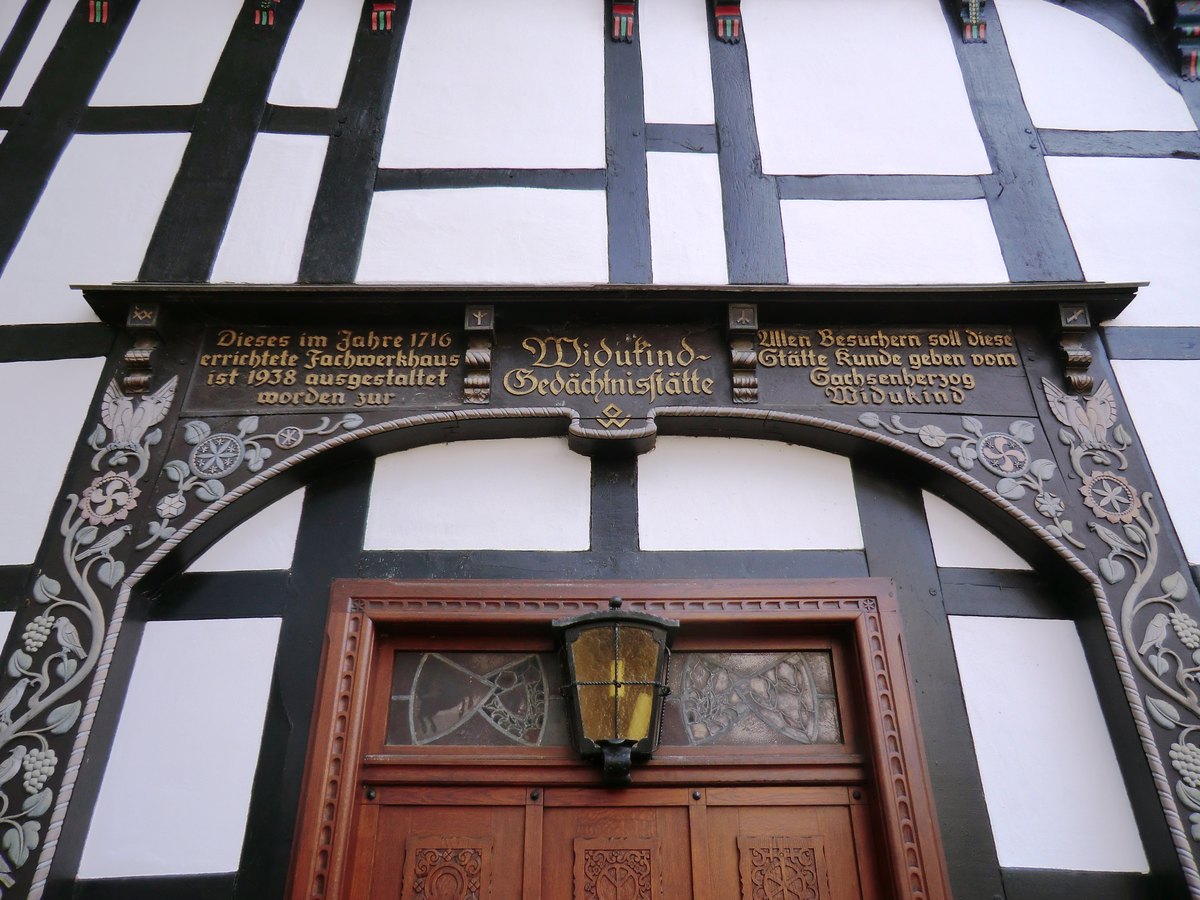
The town of Enger in present-day Germany retains a particularly strong association with his memory.
Its Widukind Museum examines the historical leader and the traditions that developed around him.
This process is significant because it illustrates how a historical figure can acquire an increasingly elaborate legendary identity.
A man remembered in political records becomes a character in stories told generations later.
Some details are preserved. Others are transformed, embellished or invented.
That does not make Widukind an example of a man becoming a god. There is no evidence that he underwent such a transformation.
It does, however, provide a useful comparison for studying how collective memory changes historical people into legendary figures.
And this question lies at the centre of WodensMan’s investigation into Odin.
What Can We Actually Conclude?
The evidence allows us to separate three propositions.
Established: Widukind’s name is conventionally derived from Germanic elements meaning forest and child.
Established: Woden’s name belongs to a different linguistic family associated with fury, frenzy and inspiration.
Unproven: Widukind’s name was deliberately intended as a reference to Woden, or was understood by his contemporaries as meaning the deity’s child.
That final possibility cannot be accepted simply because the names sound similar.
It would require additional historical or linguistic evidence.
Yet the investigation has produced something worthwhile.
The two words that initially appeared to connect Widukind with Woden have exposed two distinct strands of Germanic language and culture: the language of the natural world and the language of extraordinary mental or spiritual states.
And the Saxon leader himself offers a documented example of how historical memory can develop into legend.
Neither discovery proves that Odin was once a human ruler.
But both are relevant to understanding the linguistic and cultural environment in which traditions about Woden were preserved.
Conclusion: Sometimes the Wrong Question Leads Somewhere Useful
When I first encountered the name Widukind, I wondered whether it preserved a reference to Woden.
The linguistic evidence does not support that interpretation.
Widukind was, by the established meaning of his name, the child of the woods.
But tracing that name revealed a second, easily overlooked piece of Germanic linguistic history.
The ancient word behind Woden was not the ordinary word for a forest. It belonged to the vocabulary of frenzy, extraordinary inspiration and ecstatic experience.
That is where the evidence leads.
And in a historical investigation, following that evidence matters more than protecting the original theory.
Because sometimes a mistaken connection is precisely what leads us to ask the better question.
Frequently Asked Questions
Does Widukind mean child of Woden?
No. The established Old Saxon etymology combines widu (wood or forest) with kind (child). No reliable contemporary evidence establishes a derivation from Woden.
Was Widukind a pagan Saxon?
Yes. He was a prominent leader in Saxon resistance to Charlemagne before his recorded baptism in 785 CE.
Are Woden and Odin the same god?
Woden and Odin are generally understood as corresponding names for the same Germanic deity in Anglo-Saxon and Scandinavian traditions, although the surviving historical records differ.
Does Woden mean wood or forest?
No. Woden’s name is associated linguistically with fury, frenzy and inspiration, rather than the Germanic word for woodland.
Was Widukind descended from Odin?
There is no reliable historical evidence establishing a genealogical relationship between Widukind and Odin or Woden.
Sources and Further Reading
- Dictionary of Medieval Names from European Sources — Wedekind. Historical name elements and documented medieval forms.
- Royal Frankish Annals, AD 785 — Regnum Francorum Online. Primary record of Widukind’s baptism at Attigny.
- Matthew Coker, Voicing the Supernatural in Anglo-Saxon England — University of Oxford. Research on Woden, frenzy and inspired speech.
- Online Etymology Dictionary — Odin. Etymological background for Woden and Odin.
- Widukind Museum, Enger. Historical interpretation and subsequent legends of Widukind.
Continue the Investigation
Explore Woden vs Odin: Are They the Same Figure? and Woden in the Anglo-Saxon Royal Genealogies.
WodensMan — The Historical Odin: Myth or Memory?
Independent historical research by Christopher T. Knight.
Image credits
- Widukind and Charlemagne in a painting by Ary Scheffer. Ary Scheffer, via Wikimedia Commons. Public domain. Resized and compressed for web; no content changes.
- Autumn woodland in the Teutoburg Forest, Germany. Nikater, via Wikimedia Commons. Released into the public domain by Nikater. Resized and compressed for web; no content changes.
- Entrance to the Widukind Museum in Enger, Germany. Hiddenhauser, via Wikimedia Commons. CC0 1.0 Universal Public Domain Dedication by Hiddenhauser. Resized and compressed for web; no content changes.
ABOUT THE AUTHOR
Christopher T. Knight
Independent researcher, creator of WodensMan and author of The Historical Odin: Myth or Memory?.