Research
How the Alans Became Norse Gods
 By Christopher T. Knight
Published
Could the Norse gods have preserved the memory of real people who migrated into northern Europe from the Eurasian steppe?
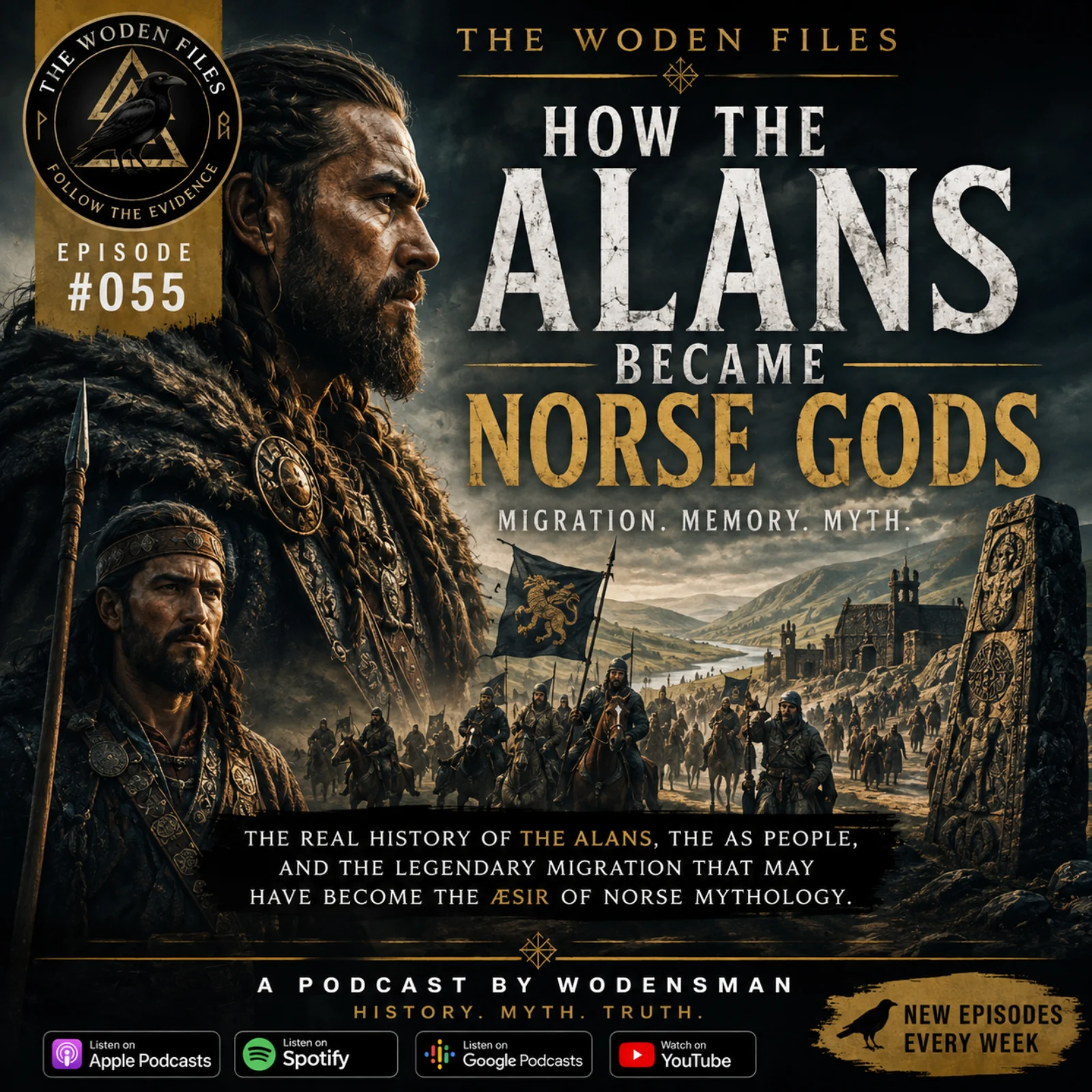
Could the Norse gods have preserved the memory of real people who migrated into northern Europe from the Eurasian steppe?
In this article, we investigate the historical Alans, an Iranian speaking cavalry people who lived around the Black Sea, the Caucasus, and the Don River. After the Hunnic invasions shattered the political order of the steppe, Alan groups moved westward, entered Germanic territories, formed alliances with Gothic and other European peoples, and became connected with powerful ruling families across Europe.

The similarities become difficult to ignore when this history is compared with Snorri Sturluson’s account of Odin and the Æsir. Snorri described the Æsir as a migrating people from the East, placed Odin’s homeland near the Don region, and remembered their arrival in northern Europe as the movement of rulers, warriors, priests, and founders. Could the word Æsir preserve a distant memory of the As or Alans? Could Odin’s legendary migration contain fragments of a real Migration Period event?
This article examines the Alans, the As people, Snorri’s eastern geography, steppe cavalry culture, Germanic alliances, and the process through which historical leaders and ancestral peoples could gradually be transformed into gods.
This is not an attempt to force mythology into history. It is an investigation into whether history survived inside the mythology.

The Historical Odin: Myth or Memory?, by Christopher T. Knight, arrives December 1, 2027.
Follow the evidence.
ABOUT THE AUTHOR
Christopher T. Knight
Independent researcher, creator of WodensMan and author of The Historical Odin: Myth or Memory?.